Harmonic Analysis & Mitigation: Why Your Power System is Quietly Destroying Equipment
A building owner calls because their 3-year-old transformer is overheating. The neutral conductor is running hotter than the phase conductors. Circuit breakers trip randomly. The culprit? Harmonics - invisible distortions in the power system waveform caused by non-linear loads. Here's how to identify, measure, and eliminate them.
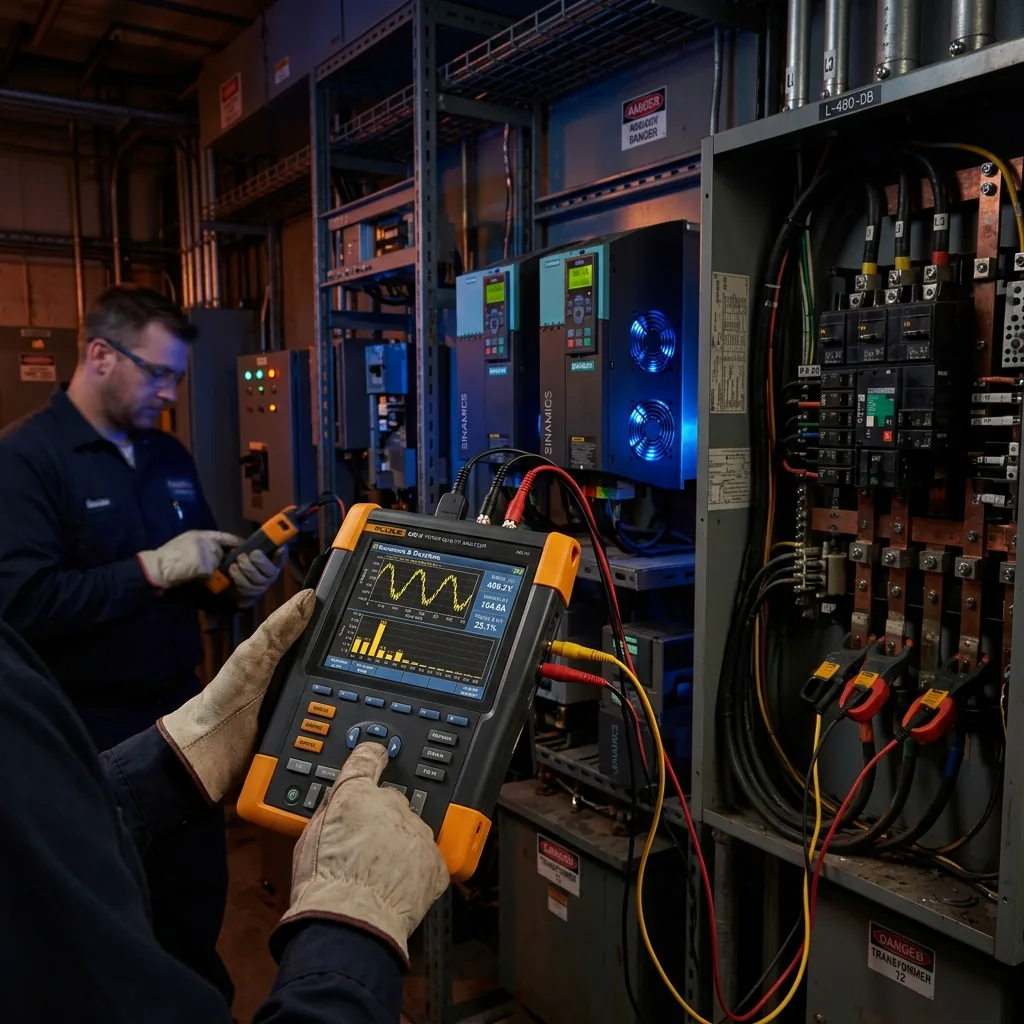
What Are Harmonics?
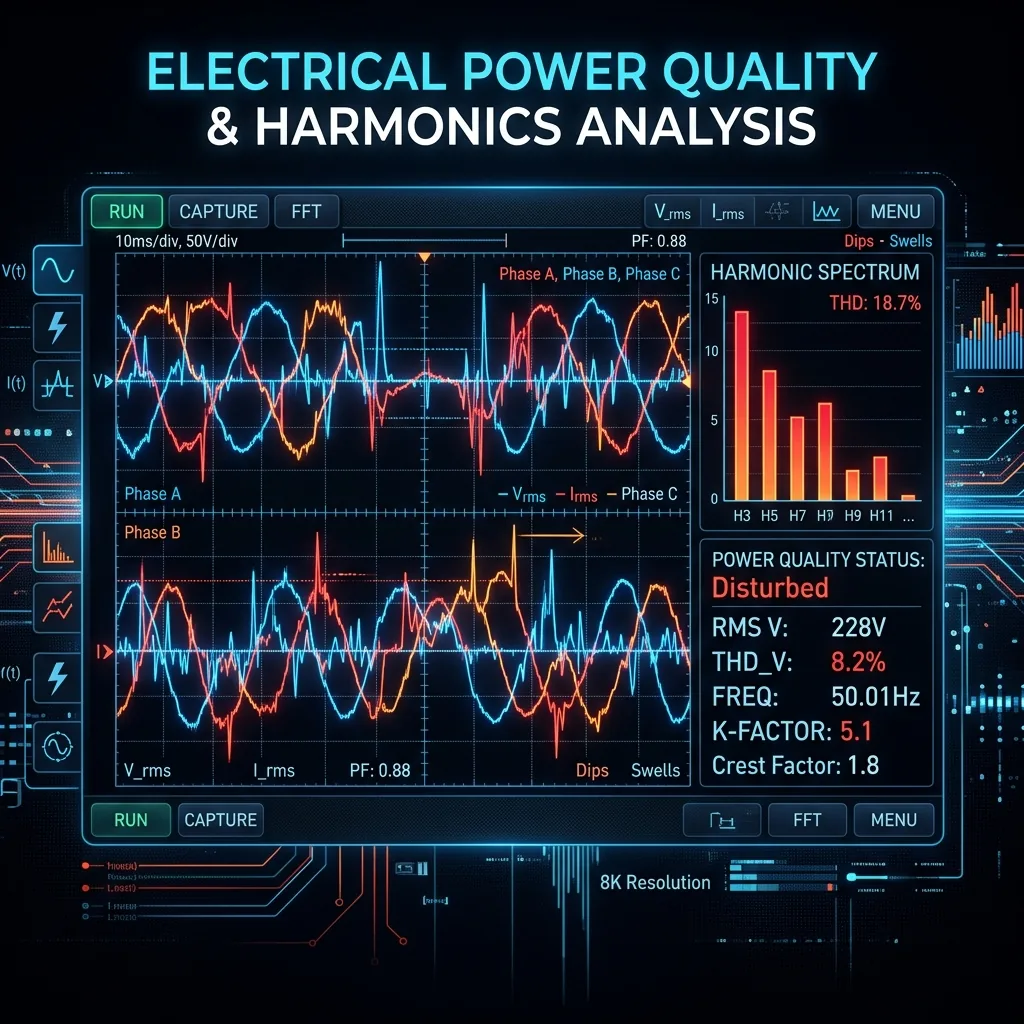
In a perfect power system, current and voltage follow a clean 60 Hz sinusoidal waveform. Harmonics are integer multiples of this fundamental frequency that distort the waveform shape:
| Harmonic Order | Frequency (60 Hz system) | Primary Source |
|---|---|---|
| 1st (Fundamental) | 60 Hz | Utility supply |
| 3rd | 180 Hz | Single-phase SMPS, LED drivers, computers |
| 5th | 300 Hz | 6-pulse VFDs, UPS systems |
| 7th | 420 Hz | 6-pulse VFDs, UPS systems |
| 11th | 660 Hz | 12-pulse VFDs |
| 13th | 780 Hz | 12-pulse VFDs |
The 3rd harmonic is particularly dangerous in three-phase systems because it's a triplen harmonic - instead of cancelling in the neutral (like balanced fundamental currents), triplen harmonics add arithmetically in the neutral conductor. This is why neutral conductors overheat in buildings with heavy computer or LED loads.
Why Harmonics Matter: Real Damage
- Transformer overheating - harmonic currents increase eddy current losses exponentially. A transformer at 35% THD experiences 2x the heating of the same load at 0% THD
- Neutral conductor overload - 3rd harmonic currents can cause the neutral to carry 1.7x the phase current
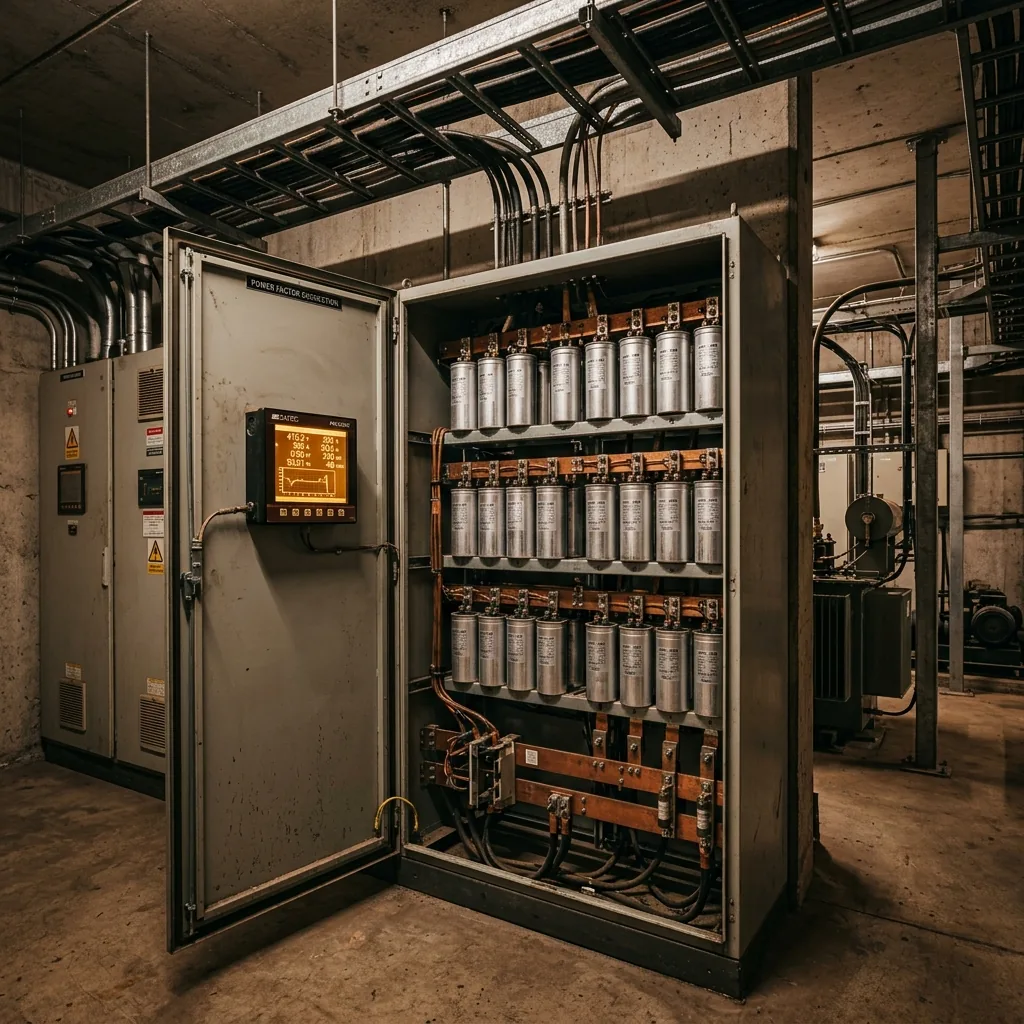
- Capacitor bank failure - harmonics cause resonance, leading to capacitor swelling and explosion
- Nuisance breaker tripping - RMS current measurement devices misread harmonic-rich waveforms
- Motor vibration & bearing failure - harmonic torque pulsations cause mechanical wear
- Utility penalties - exceeding IEEE 519 limits results in power quality surcharges
"Harmonics are the silent killer of electrical infrastructure. The symptoms - overheating, random tripping, premature equipment failure - are often misdiagnosed as equipment defects. In reality, the power feeding them is poisoned."
IEEE 519: The Compliance Standard
IEEE 519-2022 (Recommended Practice for Harmonic Control) defines the maximum allowable harmonic distortion at the Point of Common Coupling (PCC) - where your facility connects to the utility grid.
| ISC/IL Ratio | THD (Total Demand Distortion) | Individual Harmonic Limit |
|---|---|---|
| < 20 | 5.0% | 4.0% |
| 20-50 | 8.0% | 7.0% |
| 50-100 | 12.0% | 10.0% |
| 100-1000 | 15.0% | 12.0% |
| > 1000 | 20.0% | 15.0% |
Key: ISC/IL is the ratio of available short-circuit current to maximum demand load current. Weaker systems (lower ratio) have stricter limits because they're more susceptible to voltage distortion.
K-Rated vs. Harmonic Mitigating Transformers
This is the most misunderstood topic in harmonic design. They solve fundamentally different problems:
| Feature | K-Rated Transformer | Harmonic Mitigating (HMT) |
|---|---|---|
| What it does | Survives harmonic heating | Reduces harmonic levels in system |
| Method | Oversized conductors, improved core | Phase-shifting, zig-zag windings |
| Reduces THD? | No | Yes |
| IEEE 519 compliance? | Does not help | Helps significantly |
| Neutral current reduction? | No (just handles it) | Yes (cancels triplen harmonics) |
| Common K-factors | K-4, K-13, K-20 | N/A (rated by harmonic cancellation %) |
| Cost premium | 15-30% over standard | 40-60% over standard |
Design rule: A K-rated transformer protects itself from harmonics. An HMT protects the entire system from harmonics. If you need IEEE 519 compliance, K-rated alone is insufficient.
Mitigation Solutions Compared
| Solution | THD Reduction | Best For | Cost |
|---|---|---|---|
| Line reactor (3-5%) | ~40-50% of 5th/7th | VFD input filtering | $ |
| Passive harmonic filter | ~50-60% THDi reduction | Individual VFD or drive groups | $$ |
| 12-pulse drive | Eliminates 5th & 7th | Large motors (> 100 HP) | $$ |
| 18-pulse drive | < 5% THDi | Critical applications, IEEE 519 | $$$ |
| Active harmonic filter (AHF) | < 5% THDi (adaptive) | Entire system, multiple load types | $$$$ |
| Harmonic mitigating transformer | Eliminates triplens | Single-phase non-linear loads | $$ |
VFDs and Harmonics: The Biggest Source
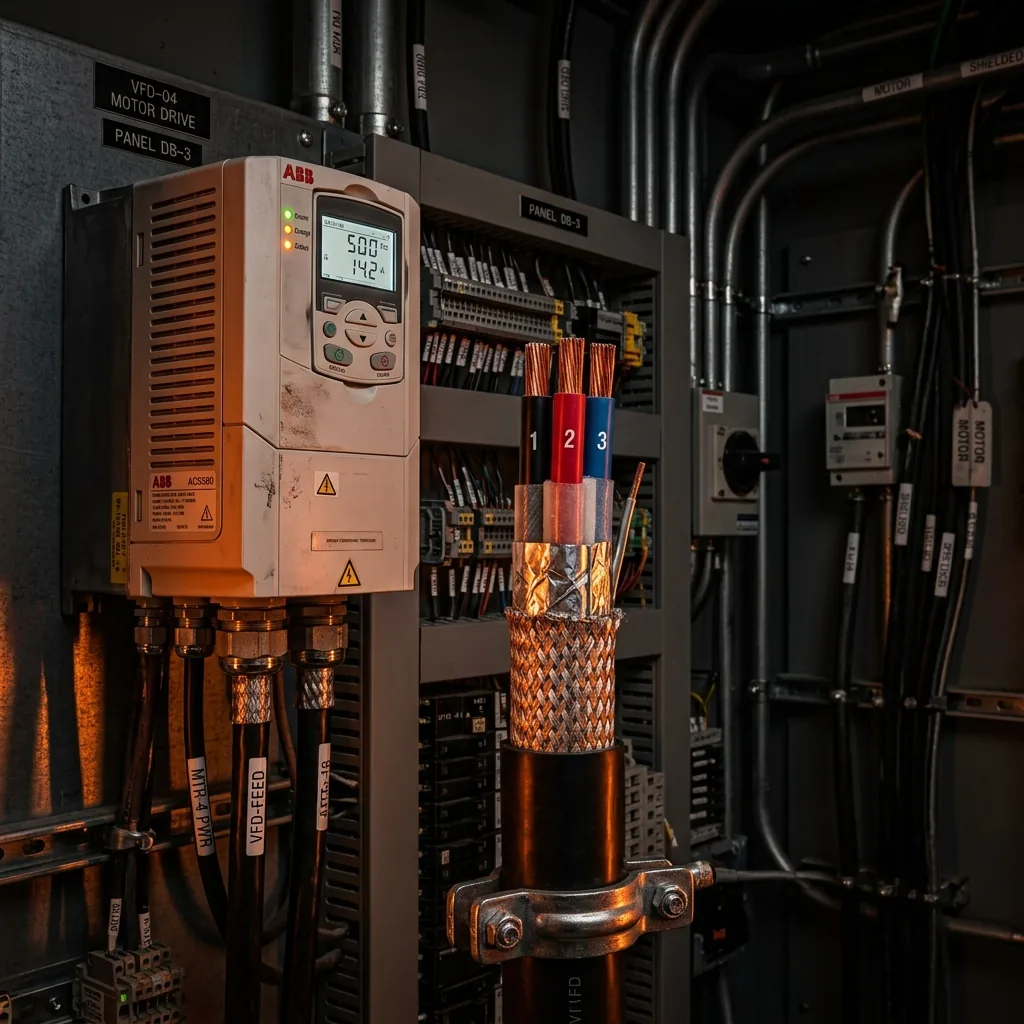
Variable Frequency Drives (VFDs) are the largest single source of harmonics in modern commercial and industrial buildings. A standard 6-pulse VFD produces characteristic harmonics at the 5th, 7th, 11th, and 13th orders.
Design strategies to minimize VFD harmonics:
- Always specify 3% line reactors minimum on VFD inputs - reduces 5th harmonic by ~40%
- Use 18-pulse drives for motors > 50 HP where IEEE 519 compliance is required
- Active front-end (AFE) drives provide near-sinusoidal input current and regenerative braking
- Don't connect power factor correction capacitors on the same bus as VFDs without detuning reactors - resonance risk
When to Perform a Harmonic Study
- Non-linear loads exceed 25% of total facility load
- Adding VFDs totaling > 100 HP to an existing system
- Utility requires IEEE 519 compliance as condition of service
- Installing power factor correction capacitors (resonance risk)
- Experiencing unexplained equipment failures, transformer overheating, or nuisance tripping
- Data centers and healthcare facilities (mandatory power quality standards)
Frequently Asked Questions
What are electrical harmonics?
Integer multiples of 60Hz created by non-linear loads (VFDs, UPS, LEDs). They cause overheating and equipment failure. Related to power factor correction.
What is IEEE 519?
The standard for harmonic limits at the utility connection point. Ontario utilities reference it for connection requirements. See our Toronto Hydro guide.
When do you need a harmonic study?
When VFDs exceed 30% of transformer capacity, adding large non-linear loads, installing capacitor banks, or when experiencing unexplained equipment failures.
Suspect Harmonic Problems?
Describe the connected equipment and operating symptoms so ETEM can help determine whether a focused harmonic assessment or mitigation study is appropriate.
Need a Harmonic Analysis Study?
ETEM Engineering performs IEEE 519-compliant harmonic studies for industrial and commercial facilities. We identify harmonic sources, model system response, and specify cost-effective mitigation solutions - from line reactors to active filters.
Get a Free Consultation