Electrical Plug & Receptacle Types: The Complete World & NEMA Guide
From the standard North American 5-15R to the UK's Type G and Australia's Type I - this guide covers every plug type you'll encounter as an engineer, traveler, or contractor. Plus: NEMA configurations for dedicated circuits, CEC requirements, and the voltage/frequency map of the world.
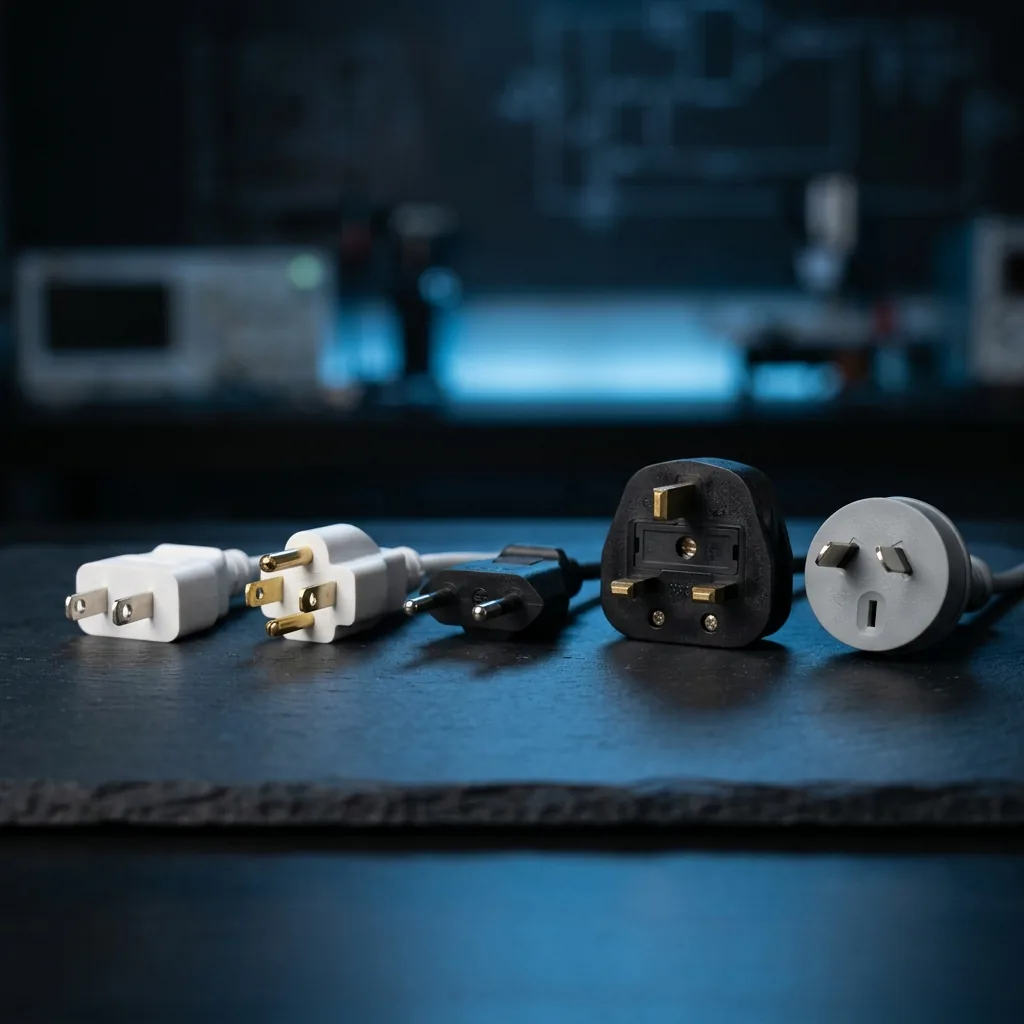
Major International Plug Types
Common international references group plugs into lettered types from A through O. Below are the major groups you will encounter. Note: Voltage and frequency vary by country - always verify the local supply before connecting equipment.
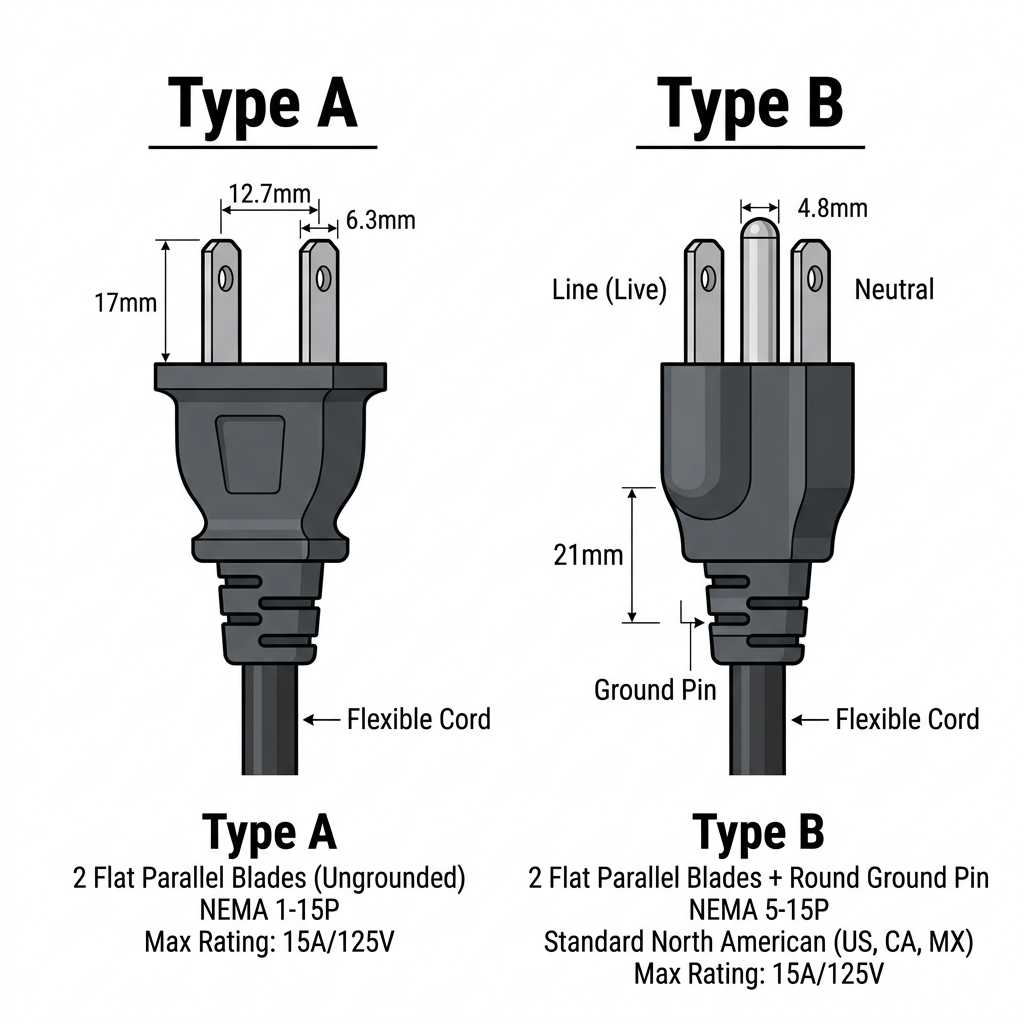
Type A & B - North America, Japan
Type A: 2 flat parallel blades, ungrounded. Type B: adds a round ground pin. Used in Canada, USA, Mexico, Japan, Central America. In Canada, all new installations require grounded Type B (NEMA 5-15R) per CEC. Japan uses the same shape but at 100V. See our CEC Receptacle Layout Guide for spacing rules.
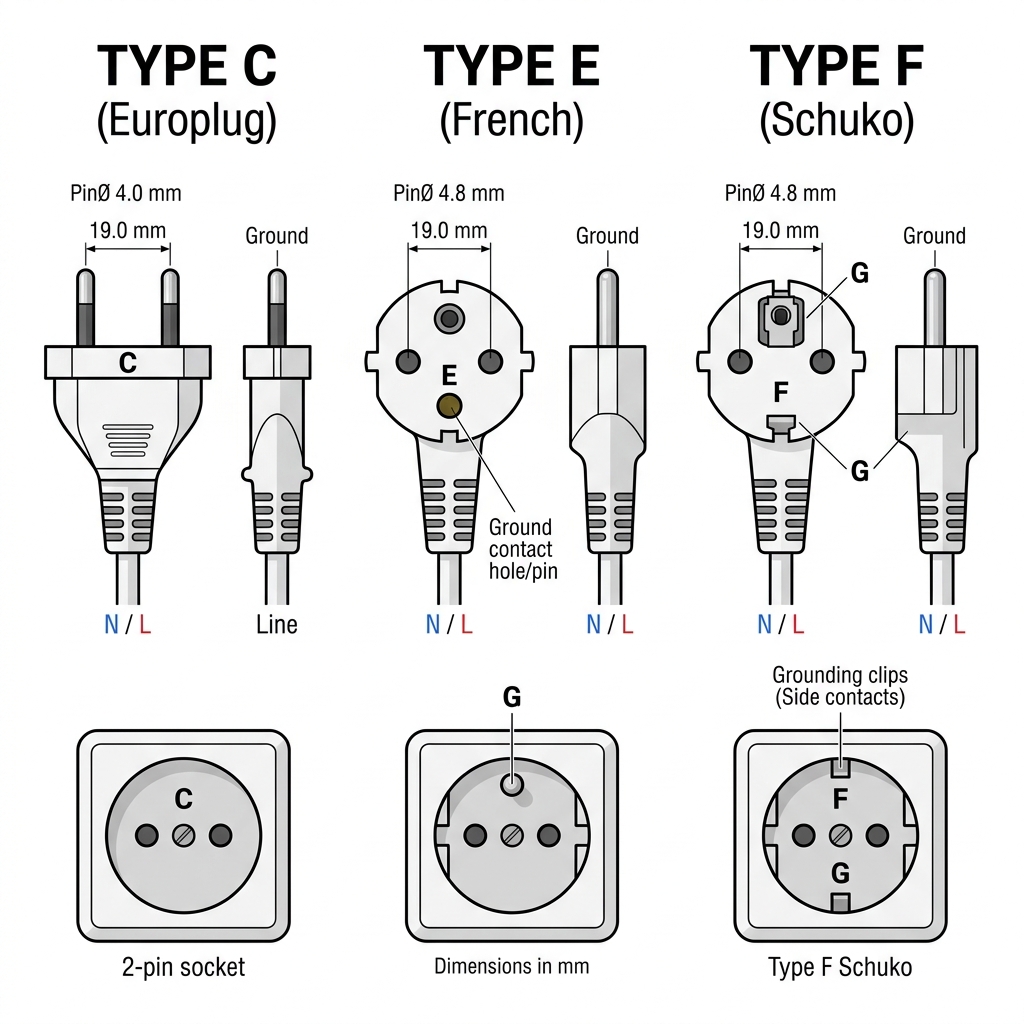
Type C, E & F - Continental Europe
Type C (Europlug): 2 round pins, ungrounded, rated 2.5A max - for low-power devices only. Type E (French): grounded via a pin in the socket. Type F (Schuko): grounded via side clips. Used across most of the EU, Russia, and parts of Asia/South America. For a detailed comparison with North American standards, see our IEC vs. North American Standards guide.
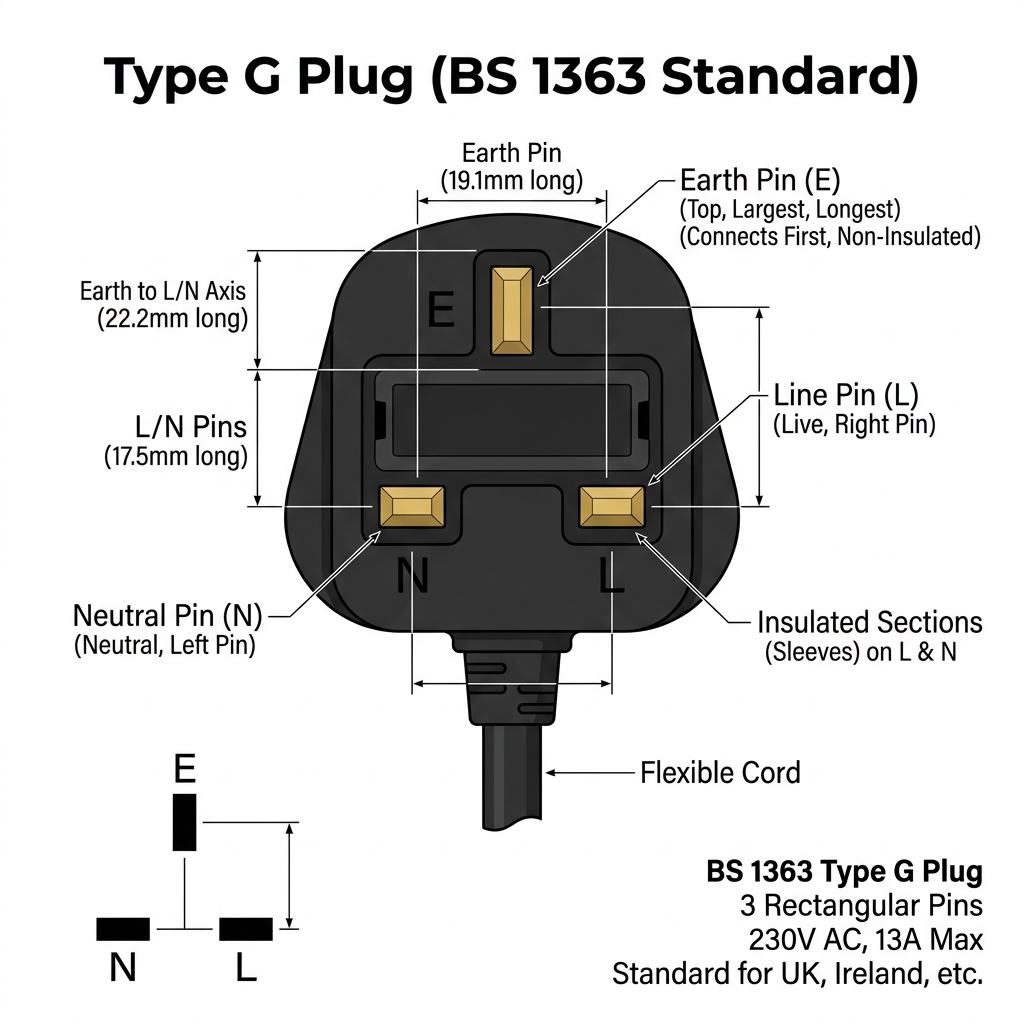
Type G - United Kingdom & Former British Regions
3 rectangular pins in a triangle. Unique feature: each plug contains its own cartridge fuse (typically 3A or 13A), providing per-appliance overcurrent protection. Grounded. Used in UK, Ireland, Singapore, Malaysia, Hong Kong, UAE, and many former British territories. 230V, 50 Hz.
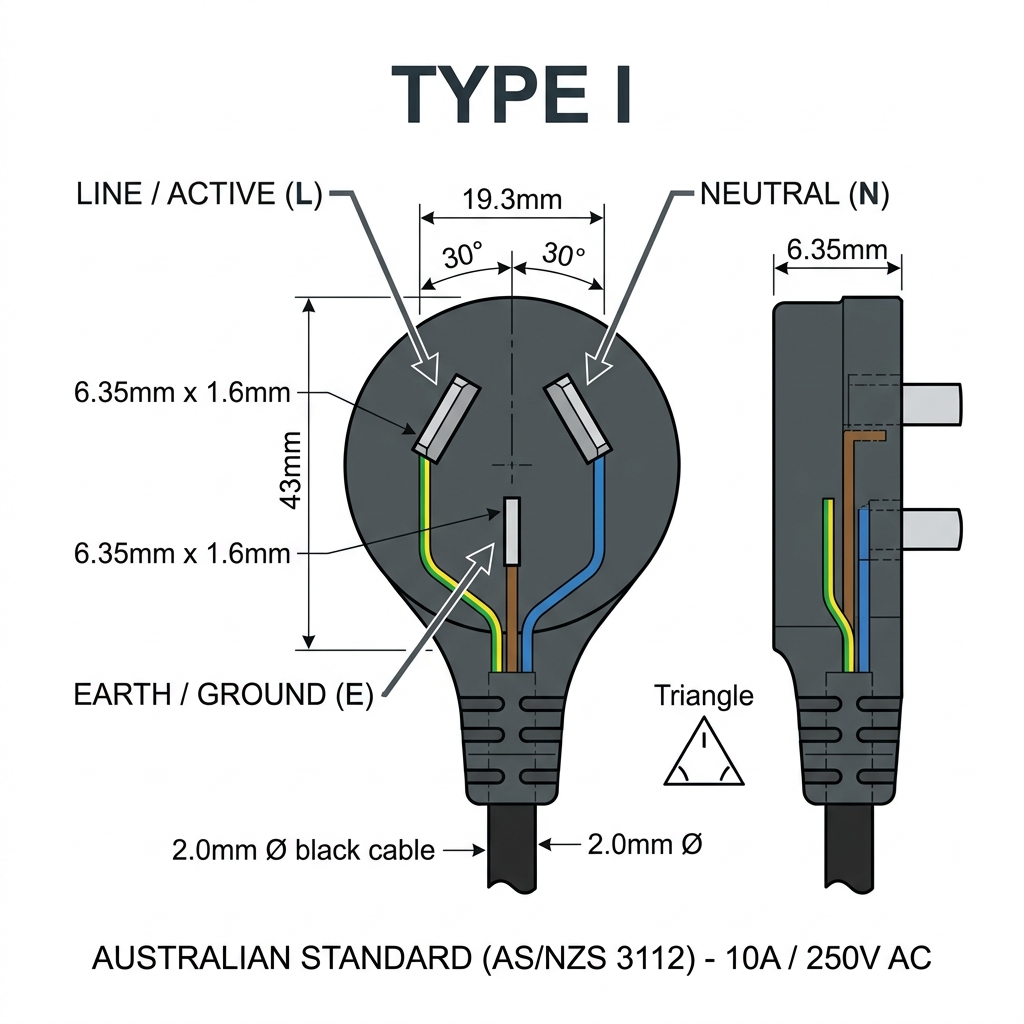
Type I - Australia, New Zealand, China, Argentina
2 angled flat blades in a V-shape plus a vertical ground pin. Grounded. 230V 50 Hz in Australia/NZ; 220V 50 Hz in China. Argentina uses a variant with inverted polarity.
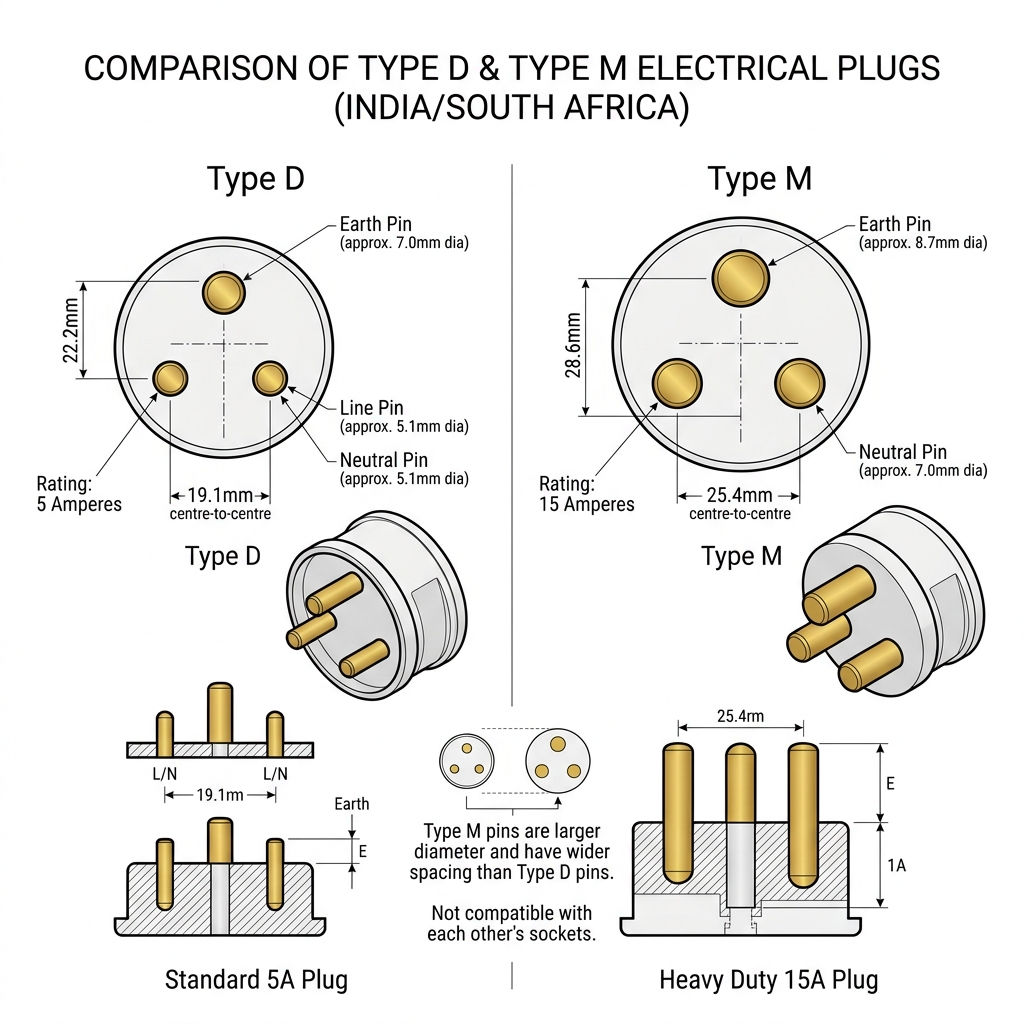
Type D & M - India, South Africa, Eswatini
Type D (BS 546, 5A): 3 large round pins in a triangle - the lighter-duty variant for general outlets. Type M (BS 546, 15A): same geometry but larger pin diameter and wider spacing, used for heavy-duty appliances (A/C, heaters). Both are grounded. Type M remains common in South Africa and Eswatini. 230V, 50 Hz.
Other Regional Types
| Type | Regions | Key Feature |
|---|---|---|
| H | Israel | 3 pins (V-shape or round), grounded, 230V 50 Hz |
| J | Switzerland, Liechtenstein | 3 round pins (offset ground), grounded, 230V 50 Hz |
| K | Denmark, Greenland | 3 round pins, grounded, 230V 50 Hz |
| L | Italy, Chile | 3 round pins (inline), grounded, 230V 50 Hz |
| N | Brazil (127/220V, 60 Hz); South Africa (230V, 50 Hz) | 3 round pins, grounded - IEC 60906-1 based |
| O | Thailand | 3 round pins, grounded, 230V 50 Hz |
Canada uses Type B (NEMA 5-15R / 5-20R grounded receptacles). Type A (ungrounded) exists in older homes but is not permitted for new installations per CEC.
World Voltage & Frequency Reference
Plug type alone does not determine voltage or frequency. Always verify the local electrical supply specifications.
| Region | Voltage | Frequency | Common Plug Types |
|---|---|---|---|
| North America (Canada, USA, Mexico) | 120V / 240V | 60 Hz | A, B |
| Continental Europe | 220-240V | 50 Hz | C, E, F |
| United Kingdom | 230V | 50 Hz | G |
| Australia / New Zealand | 230V | 50 Hz | I |
| Japan | 100V | 50/60 Hz | A, B |
| China | 220V | 50 Hz | A, C, I |
| India | 230V | 50 Hz | C, D, M |
| Brazil | 127/220V | 60 Hz | C, N |
| Middle East | 220-240V | 50 Hz | C, G (varies) |
| Africa | 220-240V | 50 Hz | C, D, G, M, N (varies) |
NEMA Configurations - North American Standard
In North America, the National Electrical Manufacturers Association (NEMA) defines plug and receptacle configurations. The naming convention follows the format: [Series]-[Amperage][P or R].
- P = Plug (male connector)
- R = Receptacle (female outlet)
- L prefix = Locking (twist-lock) configuration
Standard (Straight Blade) NEMA Configurations
| NEMA | Voltage | Amps | Poles/Wires | Ground | Common Application |
|---|---|---|---|---|---|
| 1-15 | 125V | 15A | 2P / 2W | No | Legacy ungrounded outlets (pre-1960s homes) |
| 5-15 | 125V | 15A | 2P / 3W | Yes | Standard household outlet - the most common receptacle in Canada |
| 5-20 | 125V | 20A | 2P / 3W | Yes | Kitchen countertop, bathroom, laundry - CEC dedicated circuits |
| 6-15 | 250V | 15A | 2P / 3W | Yes | Window A/C units, small equipment |
| 6-20 | 250V | 20A | 2P / 3W | Yes | Large A/C units, power tools, server equipment |
| 6-50 | 250V | 50A | 2P / 3W | Yes | Welders, some EV chargers |
| 10-30 | 125/250V | 30A | 3P / 3W | No | Legacy dryer outlet (no separate ground - pre-1996) |
| 10-50 | 125/250V | 50A | 3P / 3W | No | Legacy range outlet (no separate ground - pre-1996) |
| 14-30 | 125/250V | 30A | 3P / 4W | Yes | Electric clothes dryer - current standard |
| 14-50 | 125/250V | 50A | 3P / 4W | Yes | Electric range, EV charging (Level 2) - current standard |
CEC Note: NEMA 10-series (3-wire, no separate ground) receptacles are no longer permitted for new installations. All new dryer circuits require NEMA 14-30 (4-wire) and all new range circuits require NEMA 14-50 (4-wire) per CEC requirements.
Locking (Twist-Lock) NEMA Configurations
Locking receptacles use curved blades that twist into place, preventing accidental disconnection. Common in commercial, industrial, and generator applications.
| NEMA | Voltage | Amps | Poles/Wires | Common Application |
|---|---|---|---|---|
| L5-20 | 125V | 20A | 2P / 3W | Commercial equipment, UPS systems |
| L5-30 | 125V | 30A | 2P / 3W | Portable generators, RV parks |
| L6-20 | 250V | 20A | 2P / 3W | Server racks, data centers |
| L6-30 | 250V | 30A | 2P / 3W | Industrial equipment, welders |
| L14-20 | 125/250V | 20A | 3P / 4W | Portable generators (smaller) |
| L14-30 | 125/250V | 30A | 3P / 4W | Portable generators (standard - most common) |
| L21-30 | 120/208V 3~ | 30A | 4P / 5W | Three-phase commercial, data centers |
CEC Dedicated Circuit Requirements
The Canadian Electrical Code requires dedicated circuits (serving only one appliance) for specific equipment. Each requires its own specific receptacle configuration:
| Appliance | NEMA Receptacle | Circuit | CEC Reference |
|---|---|---|---|
| Electric range / oven | 14-50R | 40A or 50A, 240V | Rule 26-744 |
| Electric dryer | 14-30R | 30A, 240V | Rule 26-744 |
| Dishwasher | 5-15R or 5-20R | 15A or 20A, 120V | Rule 26-720 |
| Garburator (disposal) | 5-15R (split or dedicated) | 15A, 120V | Rule 26-720 |
| Microwave (built-in) | 5-20R | 20A, 120V | Rule 26-720 |
| Refrigerator | 5-15R | 15A, 120V (dedicated recommended) | Rule 26-720 |
| Washer | 5-20R | 20A, 120V | Rule 26-720 |
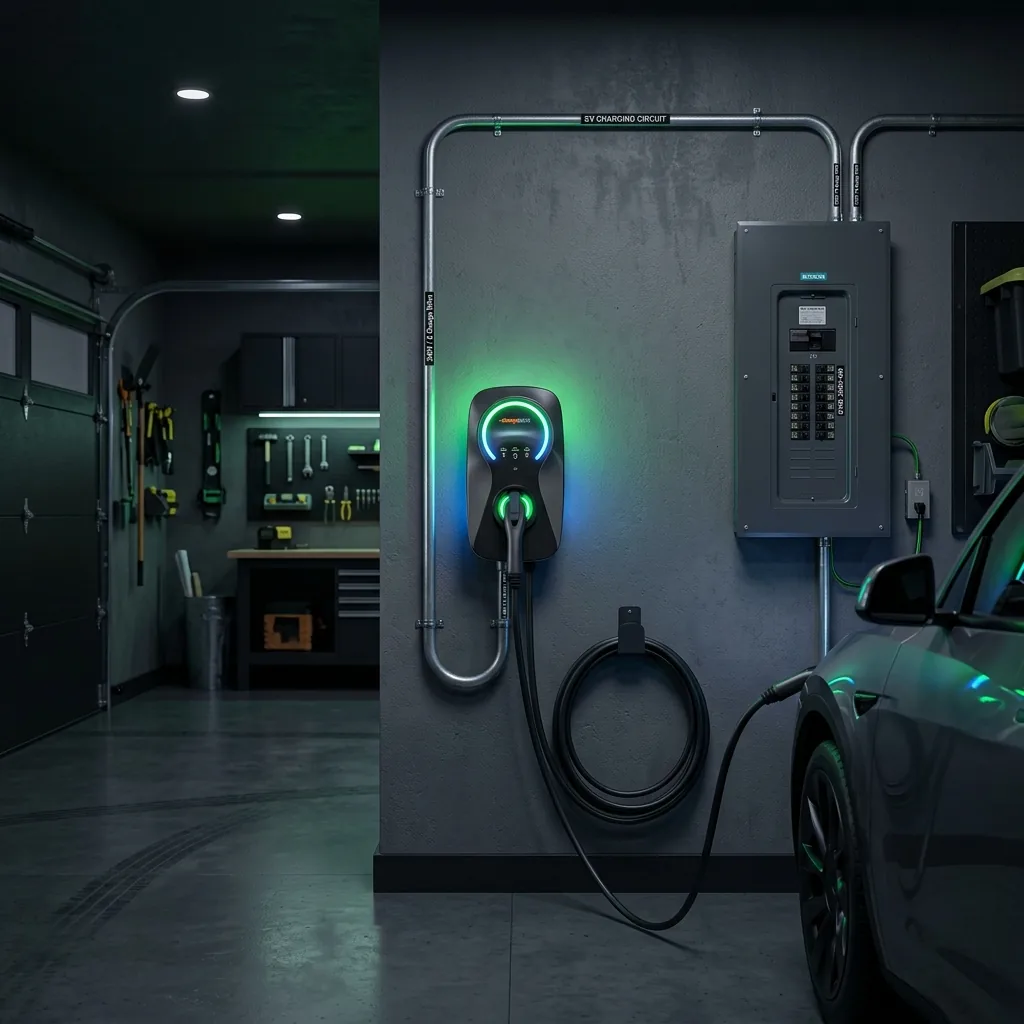
| EV charger (Level 2) | 14-50R or hardwired | 40A"50A, 240V | Section 86 - see our EV-Ready guide |
| Central A/C | Hardwired or 6-20R | Per nameplate | Rule 26-744 |
| Bathroom receptacle | 5-20R (GFCI) | 20A, 120V | Rule 26-724 |
Key Engineering Considerations
- Voltage mismatch = equipment damage. A 120V device plugged into 240V will be destroyed. Always verify voltage before connecting.
- Adapters converters. A plug adapter changes shape only - it does not convert voltage. A transformer/converter is needed for voltage conversion.
- Frequency matters for motors. A 60 Hz motor running on 50 Hz will run slower and may overheat. Electronic devices with switch-mode power supplies (laptops, phones) generally handle both.
- Tamper-resistant (TR) receptacles are required in all dwelling unit locations per CEC for 15A and 20A, 125V receptacles.
- Weather-resistant (WR) receptacles are required for all outdoor and damp locations.
Frequently Asked Questions
What plug type does Canada use?
Canada uses Type B plugs (NEMA 5-15 grounded). Type A (ungrounded) exists in older homes but is not permitted for new installations per the Canadian Electrical Code. For kitchen, bathroom, and laundry circuits, NEMA 5-20R receptacles are required.
What is the difference between NEMA 14-30 and 14-50?
NEMA 14-30 is a 30A, 125/250V receptacle for electric dryers. NEMA 14-50 is a 50A, 125/250V receptacle for electric ranges and Level 2 EV chargers. Both are 4-wire (3-pole + ground).
Can I use a plug adapter to convert voltage?
No. A plug adapter only changes the physical shape. It does not convert voltage. Plugging a 120V device into a 240V outlet through an adapter will destroy the device. A voltage converter or transformer is required.
What is a NEMA locking receptacle?
A locking (twist-lock) receptacle uses curved blades that twist into place, preventing accidental disconnection. Common in generator installations, industrial equipment, and data centers. Designated with an "L" prefix (e.g., L14-30).
What is the difference between Type C, E, and F European plugs?
Type C (Europlug) has 2 round pins and is ungrounded, rated only 2.5A. Type E (French) adds grounding via a pin in the socket. Type F (Schuko/German) adds grounding via side clips. See our IEC vs. North American Standards comparison for more detail.
Sources: International plug classifications per IEC World Plugs and WorldStandards.eu. NEMA configurations per NEMA WD 6. CEC references per CSA C22.1 and ESA bulletins.
Planning Equipment and Receptacle Compatibility?
ETEM can review the proposed scope, existing conditions and applicable approval requirements to determine the engineering documentation needed for the project.
Need Electrical Design for Your Project?
ETEM Engineering designs code-compliant electrical systems with proper receptacle configurations for residential, commercial, and industrial projects across Ontario.
Get a Free Consultation