IEC vs. North American Electrical Standards: Key Differences Every Engineer Should Know
If you've ever worked on a project that crossed international borders - or received equipment spec'd to IEC standards for a Canadian installation - you know the confusion is real. Voltage levels, wire sizing, protection philosophy, even the way we label things are fundamentally different. Here's the definitive side-by-side comparison.
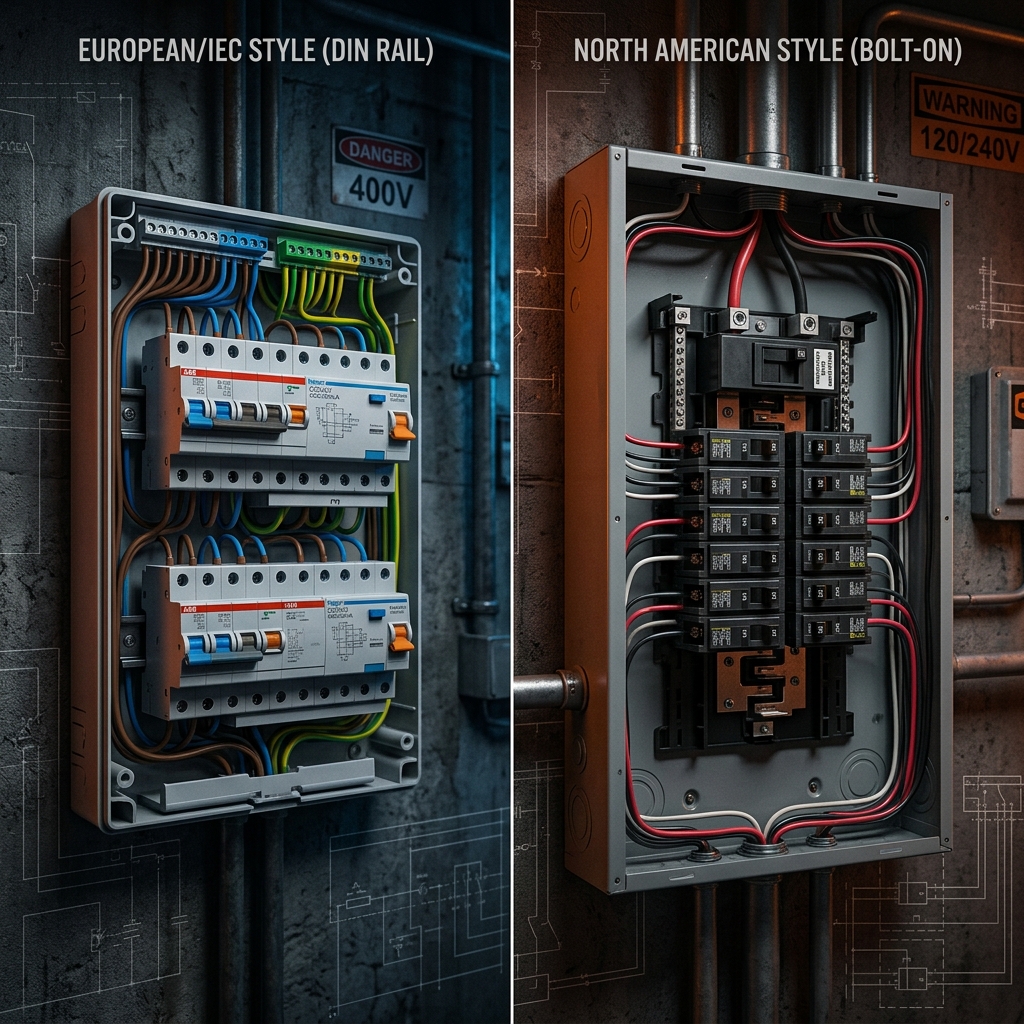
The Fundamental Philosophy Difference
Before diving into specifics, it's important to understand that IEC and North American standards evolved from different engineering philosophies:
- IEC (International Electrotechnical Commission) - performance-based standards. They define what must be achieved, giving engineers flexibility in how to achieve it. Used across Europe, Middle East, Asia, Africa, and most of the world.
- North American (CEC/NEC) - prescriptive standards. They specify exactly how things must be done - wire sizes, conduit types, clearances. Used in Canada (CEC) and the United States (NEC).
Neither approach is superior - they achieve comparable safety levels through different paths. But mixing them on a project creates serious compliance problems.
Voltage Systems: The Most Visible Difference
The most immediately obvious difference is the voltage and frequency used:
| Parameter | IEC (Most of World) | North America (CEC/NEC) |
|---|---|---|
| Single-phase residential | 230V, 50 Hz | 120/240V, 60 Hz |
| Three-phase commercial | 400V, 50 Hz | 208V or 600V, 60 Hz |
| Three-phase industrial | 690V, 50 Hz | 480V or 600V, 60 Hz |
| Lighting circuits | 230V | 120V or 347V |
| Receptacle voltage | 230V (single outlet) | 120V (duplex outlet) |
"The 347/600V system unique to Canada is one of the first surprises for international engineers. It doesn't exist anywhere in the IEC world - and it's the standard commercial voltage across Ontario."
Wire Sizing: AWG vs. mm²
This is where most cross-border confusion happens. North America uses the American Wire Gauge (AWG) system, while the IEC world uses metric cross-sectional area (mm²):
| AWG / kcmil (NA) | Approx. mm² (IEC) | Typical Use |
|---|---|---|
| #14 AWG | 2.5 mm² | 15A lighting circuits |
| #12 AWG | 4.0 mm² | 20A receptacle circuits |
| #10 AWG | 6.0 mm² | 30A appliance circuits |
| #8 AWG | 10 mm² | 40-50A feeders |
| #4/0 AWG | 120 mm² | 200A services |
| 500 kcmil | 253 mm² | Large feeders |
Critical note: The sizes are not exact equivalents. A 2.5 mm² IEC conductor is slightly larger than #14 AWG (2.08 mm²). Direct substitution without recalculating ampacity is an engineering error.
Wiring Methods
The physical installation methods differ significantly:
| Aspect | IEC | North American |
|---|---|---|
| Preferred method | Multi-core cables (NYM, NYY) | Individual conductors in conduit (EMT, rigid) |
| Cable trays | Very common, primary method | Common for feeders, conduit still dominant |
| Residential wiring | Rigid PVC conduit or cable in walls | NMD90 (Romex) cable |
| Color codes | Brown/Black/Grey (L1/L2/L3), Blue (N), Green-Yellow (PE) | Red/Black/Blue (L1/L2/L3), White (N), Green (PE) |
| DIN rail mounting | Standard for all breakers/devices | Bolt-on or plug-on breakers in panelboards |
Protection Devices: RCD vs. GFCI/AFCI
Both systems protect people from electrical shock, but the approach and terminology differ:
| Feature | IEC (RCD/RCCB) | North American (GFCI/AFCI) |
|---|---|---|
| Shock protection device | RCD / RCCB (Residual Current Device) | GFCI (Ground Fault Circuit Interrupter) |
| Trip threshold | 30 mA (personnel), 300 mA (fire) | 5 mA (Class A GFCI) |
| Arc fault protection | AFDD (Arc Fault Detection Device) - newer, limited adoption | AFCI (Arc Fault Circuit Interrupter) - mandatory since 2002 |
| Coverage philosophy | Whole-circuit RCD protection common | Point-of-use GFCI receptacles or breakers |
| Combined protection | RCBO (RCD + MCB in one device) | Dual-function AFCI/GFCI breaker |
Key difference: IEC RCDs trip at 30 mA - six times less sensitive than North American GFCIs at 5 mA. This is because IEC systems operate at 230V where 30 mA is the threshold for ventricular fibrillation, while North American 120V systems use the lower 5 mA threshold as an additional safety margin.
Grounding Philosophies: TN, TT, IT vs. CEC Section 10
This is arguably the most complex difference. IEC defines three earthing systems with distinct fault-clearing strategies:
| IEC System | Description | North American Equivalent |
|---|---|---|
| TN-S | Separate neutral and PE throughout | Closest to CEC standard practice |
| TN-C-S | Combined PEN conductor splits at service | Similar to typical NA service entrance |
| TN-C | Combined neutral/ground throughout | Not permitted in CEC for new installations |
| TT | Independent earth rod at each installation | No direct equivalent (rural exceptions) |
| IT | Ungrounded / impedance-grounded system | Used in hospitals (CEC 24-112) |
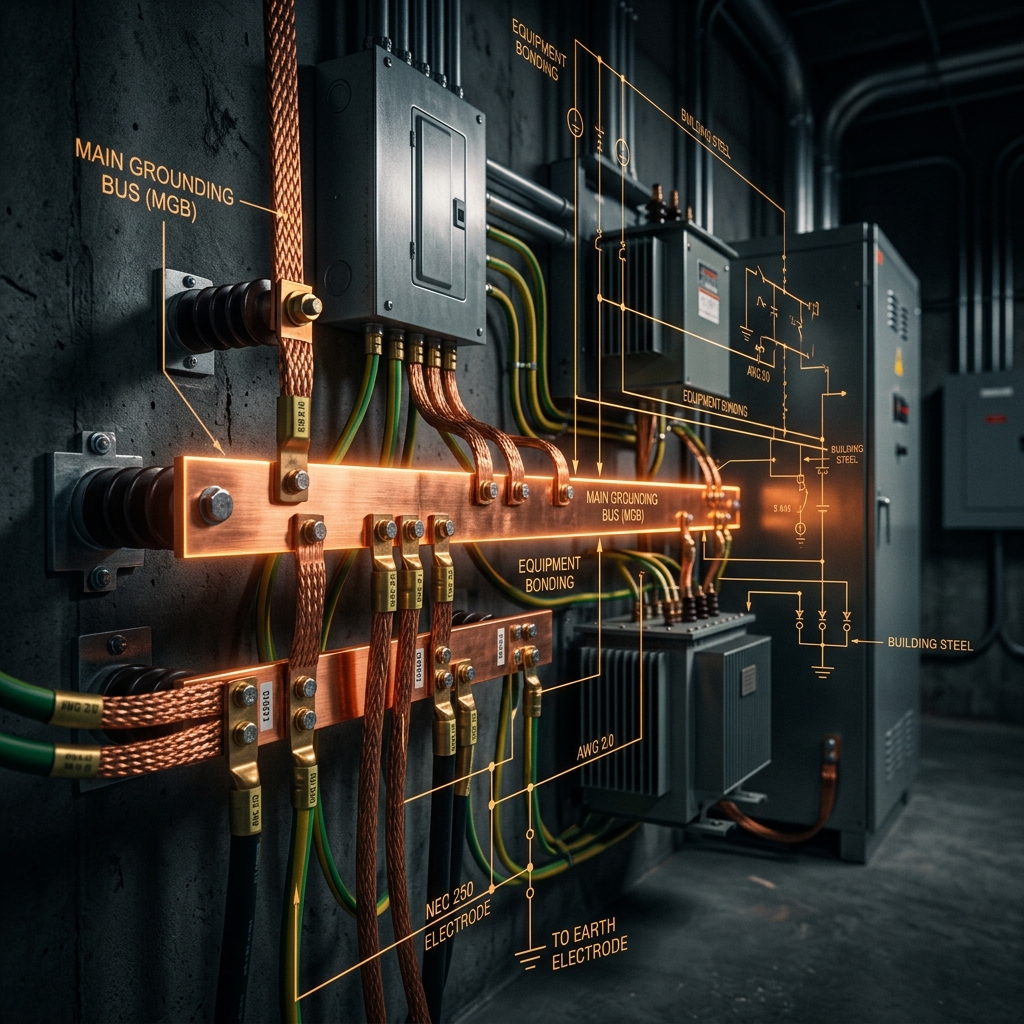
In North America, CEC Section 10 mandates a solidly-grounded system for most installations. The IEC's TT system - where each building has its own independent ground rod - is almost never used in Canada.
Motor Ratings: IEC vs. NEMA
Motor specifications cause constant headaches on international projects:
| Parameter | IEC (IEC 60034) | NEMA (MG-1) |
|---|---|---|
| Power rating | kW | HP (horsepower) |
| Frame sizes | IEC metric frames (71, 90, 112, 132) | NEMA frames (48, 56, 143T, 213T) |
| Efficiency classes | IE1, IE2, IE3, IE4 | Standard, EPAct, NEMA Premium |
| Enclosure/protection | IP55, IP65 | TEFC, ODP, TENV |
| Starter classification | AC-1, AC-2, AC-3, AC-4 | NEMA Size 0, 1, 2, 3 |
| Conversion | 1 HP = 0.746 kW | |
Enclosure Ratings: IP vs. NEMA
Both systems rate enclosure protection, but they're not directly interchangeable:
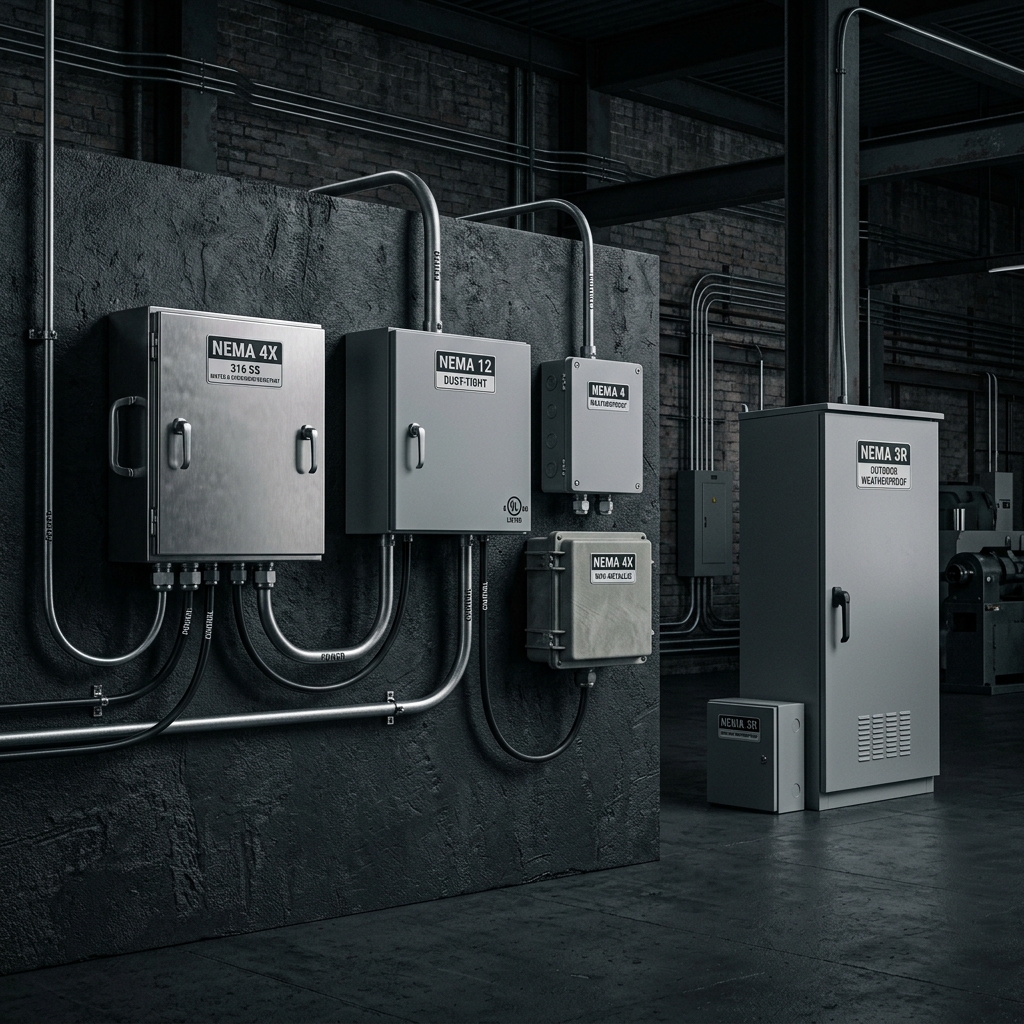
| NEMA Rating | Closest IP Equivalent | Protection Level |
|---|---|---|
| NEMA 1 | IP23 | Indoor, falling dirt |
| NEMA 3R | IP24 | Outdoor, rain, sleet |
| NEMA 4 | IP66 | Watertight, hosedown |
| NEMA 4X | IP66 + corrosion | Watertight, corrosion-resistant |
| NEMA 12 | IP52 | Industrial, dust, dripping |
Important: NEMA ratings include additional tests for corrosion, gasket aging, and mechanical impact that IP ratings do not. You can substitute NEMA for IP (a NEMA 4 exceeds IP66), but not the reverse - specifying IP66 does not guarantee NEMA 4 compliance.
Practical Tips for Cross-Border Projects
If you're working on a project that involves international equipment or standards:
- Always convert wire sizes - never assume AWG = mm² equivalents. Recalculate ampacity using the applicable code (CEC Table 2 or IEC 60364-5-52).
- Verify equipment certifications - IEC equipment needs CSA or cUL certification for Canadian installation. CE marking alone is not accepted.
- Watch for voltage mismatches - a 400V IEC motor cannot run on a 480V or 600V North American system without a transformer or dual-rated motor.
- Don't mix color codes - on the same project, pick one standard. IEC brown/blue/green-yellow or CEC red-black-blue/white/green.
- Engage a local P.Eng early - an engineer experienced in both systems can prevent costly rework during construction.
Frequently Asked Questions
What is the main difference between IEC and North American standards?
IEC standards are performance-based, giving engineers flexibility in how to achieve safety outcomes. North American standards (CEC/NEC) are prescriptive, specifying exact wire sizes, conduit types, and clearances. See our grounding vs. bonding guide for a related CEC deep-dive.
Can IEC equipment be installed in Canada?
IEC equipment requires CSA or cUL certification for Canadian installation. CE marking alone is not accepted. Review our NEMA enclosure guide for the enclosure rating differences.
Why does Canada use 347/600V?
The 347/600V system is unique to Canada and provides higher efficiency for commercial lighting and power distribution. It has no IEC equivalent. See our service entrance design guide for more on Canadian voltage systems.
Working on an International Project in Ontario?
Send us your equipment specifications and we'll verify CEC/CSA compliance - no obligation.

Need Help with International Equipment Compliance?
ETEM Engineering has expertise in both IEC and North American standards. We help international companies navigate CEC/CSA requirements for Ontario installations - from equipment certification to full electrical design.
Get a Free Consultation