Medium Voltage Switchgear Design: 4.16kV & 13.8kV Systems That Keep Large Facilities Running
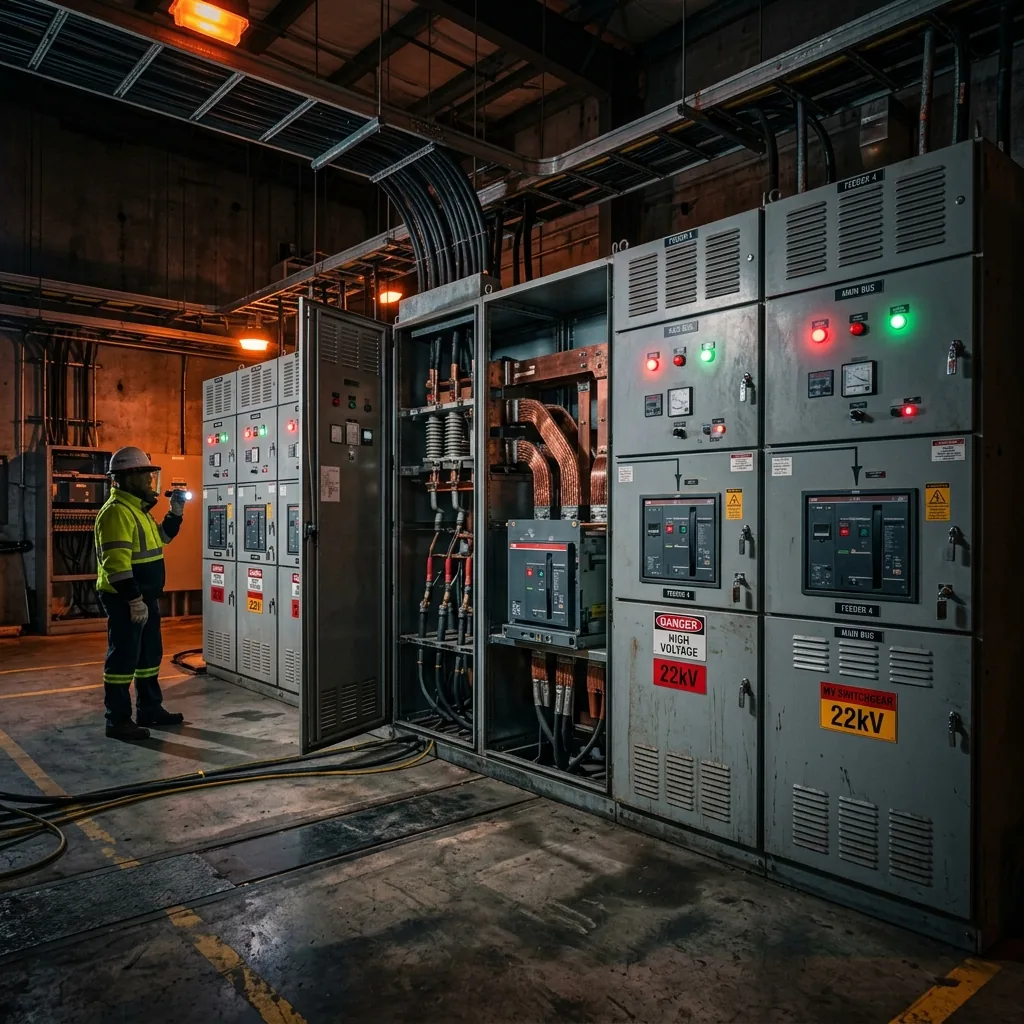
When a facility's electrical demand exceeds 3 MVA, low voltage distribution becomes impractical - cable sizes explode, voltage drop becomes unmanageable, and fault currents exceed equipment ratings. The solution is medium voltage (MV) distribution at 4.16kV or 13.8kV. But MV design is a different discipline with higher stakes: arc flash energies measured in megajoules, protection relays instead of breakers, and clearance requirements that dictate entire room layouts.
When Do You Need Medium Voltage?
The transition from low voltage (600V) to medium voltage is driven by economics and physics:
| Facility Load | Recommended Voltage | Typical Application |
|---|---|---|
| < 1 MVA | 600V | Small commercial, retail |
| 1-3 MVA | 600V or 4.16kV | Mid-size commercial, institutional |
| 3-10 MVA | 4.16kV | Large commercial, hospitals, campuses |
| 10-50 MVA | 13.8kV | Heavy industrial, data centers, high-rises |
| > 50 MVA | 27.6kV or 44kV | Mining, large manufacturing, utility sub-transmission |
"The cost crossover point is approximately 2-3 MVA. Below that, LV distribution is more economical. Above it, MV distribution saves money on cable, reduces losses, and improves voltage regulation - despite the higher cost of MV equipment."
Switchgear Types: Metal-Clad vs. Metal-Enclosed
Not all MV switchgear is created equal. IEEE C37.20 defines three construction types:
| Feature | Metal-Clad (C37.20.2) | Metal-Enclosed (C37.20.3) |
|---|---|---|
| Breaker type | Draw-out (rackable) | Fixed or removable |
| Compartmentalization | All compartments grounded metal barriers | Barriers may be non-metallic |
| Bus bars | Fully insulated, enclosed | May be bare or partially insulated |
| Shutters | Automatic shutters when breaker withdrawn | Not required |
| Voltage class | 4.16kV - 38kV | 4.16kV - 38kV |
| Arc resistance | Available (IEEE C37.20.7) | Limited options |
| Cost | Higher | Lower |
| Best for | Mission-critical, hospitals, data centers | Industrial, less critical applications |
Design recommendation: For any facility where downtime is costly (healthcare, data centers, manufacturing), always specify metal-clad switchgear. The draw-out breakers enable maintenance without de-energizing the bus - critical for facilities that can't tolerate shutdowns.
MV Protection: Relays, Not Breakers
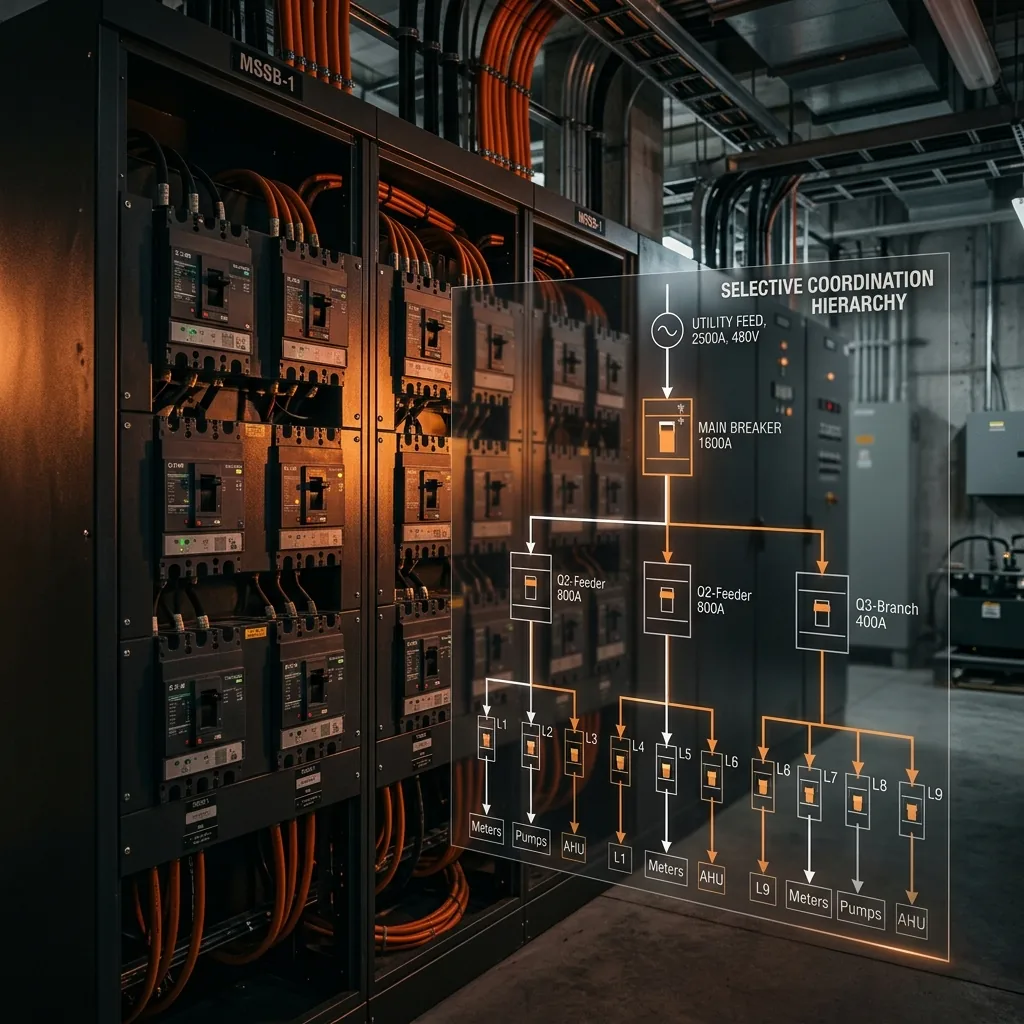
Unlike low voltage where the breaker senses and trips itself, MV systems use a separate relay + breaker architecture:
- Current Transformers (CTs) - sense line current and feed proportional signal to relays
- Voltage Transformers (VTs/PTs) - step down MV to 120V for metering and relay sensing
- Protective relays - microprocessor-based devices (SEL, GE Multilin, ABB) that execute protection functions (50/51, 27, 59, 81, 87)
- MV circuit breaker - vacuum or SF6 interrupting mechanism, rated for 250-40,000A fault current
Common MV Relay Functions
| ANSI Code | Function | Purpose |
|---|---|---|
| 50 | Instantaneous overcurrent | Fast trip for close-in faults |
| 51 | Time overcurrent | Coordinated protection with downstream devices |
| 27 | Undervoltage | Detect voltage sags, loss of source |
| 59 | Overvoltage | Protect against voltage swells |
| 81 | Frequency | Under/over frequency protection |
| 87 | Differential | Transformer/bus differential protection (fastest) |
| 25 | Sync check | Verify synchronism before paralleling sources |
Arc Flash at Medium Voltage
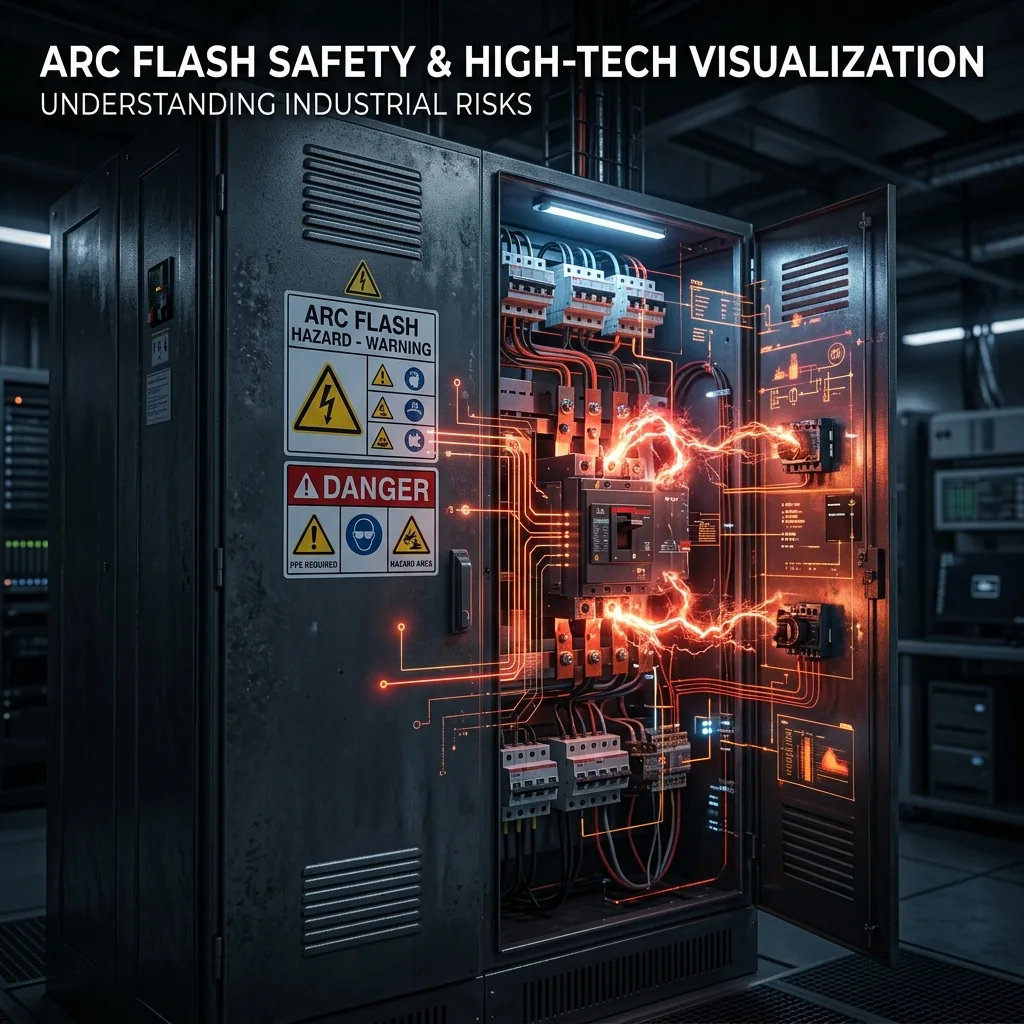
Arc flash at MV is orders of magnitude more dangerous than at 600V. Incident energy levels routinely exceed 40 cal/cm² - well beyond the protection capability of standard PPE:
| Voltage | Typical Incident Energy | Arc Flash Boundary |
|---|---|---|
| 208/600V LV panelboard | 1-8 cal/cm² | 3-6 ft |
| 4.16kV switchgear | 15-40 cal/cm² | 15-25 ft |
| 13.8kV switchgear | 30-80+ cal/cm² | 25-50+ ft |
Arc-resistant switchgear (IEEE C37.20.7) is designed to redirect arc flash energy through top-mounted flaps, away from personnel. It reduces incident energy at the operator position to < 1.2 cal/cm² regardless of the available fault energy. For any new MV installation, arc-resistant construction should be standard.
Electrical Room Requirements for MV
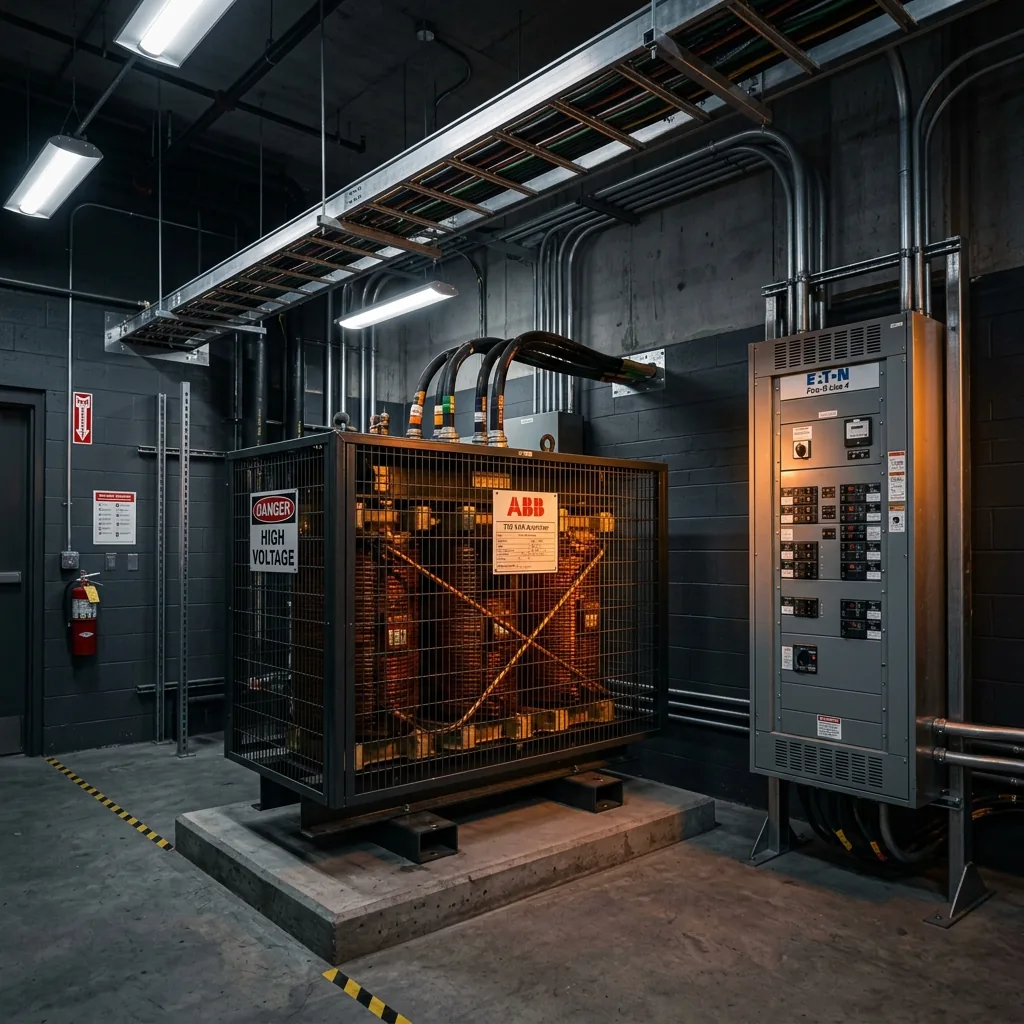
MV switchgear rooms have stringent requirements per CEC Section 26 and CSA Z462:
- Working clearance: Minimum 1.5m (5 ft) in front of equipment, increased for higher voltages
- Rear access: If rear-accessible, minimum 900mm clearance behind switchgear
- Two exits: Required for rooms with equipment rated > 1200A or > 6 ft wide
- Doors: Must open outward, equipped with panic hardware
- Fire rating: 2-hour fire-rated separation from adjacent spaces
- Ventilation: Forced ventilation to remove heat dissipation (typically 5-15 kW per lineup)
- Floor loading: MV switchgear weighs 2,000-5,000 kg per section - structural review required
4.16kV vs. 13.8kV: Which to Choose?
| Factor | 4.16 kV | 13.8 kV |
|---|---|---|
| Utility supply voltage | Requires step-down from utility MV | Often matches utility supply directly |
| Cable cost | Moderate | Lower (smaller cables for same power) |
| Motor availability | Wide range (4.16kV motors common) | Limited (mostly > 500 HP) |
| Distribution reach | Up to ~2 km effectively | Up to ~10 km effectively |
| Arc flash energy | Lower | Higher (needs arc-resistant design) |
| Best for | Campus distribution, hospitals | Heavy industry, large campuses, data centers |
Planning a Medium Voltage Installation?
Describe the preliminary load, service context and project stage so ETEM can help define the appropriate medium-voltage planning scope.
Frequently Asked Questions
When is medium voltage switchgear required?
What is the difference between metal-clad and metal-enclosed switchgear?
What are the arc flash risks at medium voltage?
Need Medium Voltage Engineering?
ETEM Engineering designs medium voltage power distribution systems for hospitals, data centers, industrial facilities, and campus infrastructure. From switchgear specification to relay coordination and arc flash studies - we deliver complete MV solutions.
Get a Free Consultation