Electrical Permit Process in Ontario: A Step-by-Step Guide
Whether you're renovating a storefront, building a new home, or upgrading commercial equipment - if it involves electrical work in Ontario, you need a permit. Here's everything you need to know about the process, who needs engineering drawings, and how to avoid costly delays.
Who Issues Electrical Permits in Ontario?
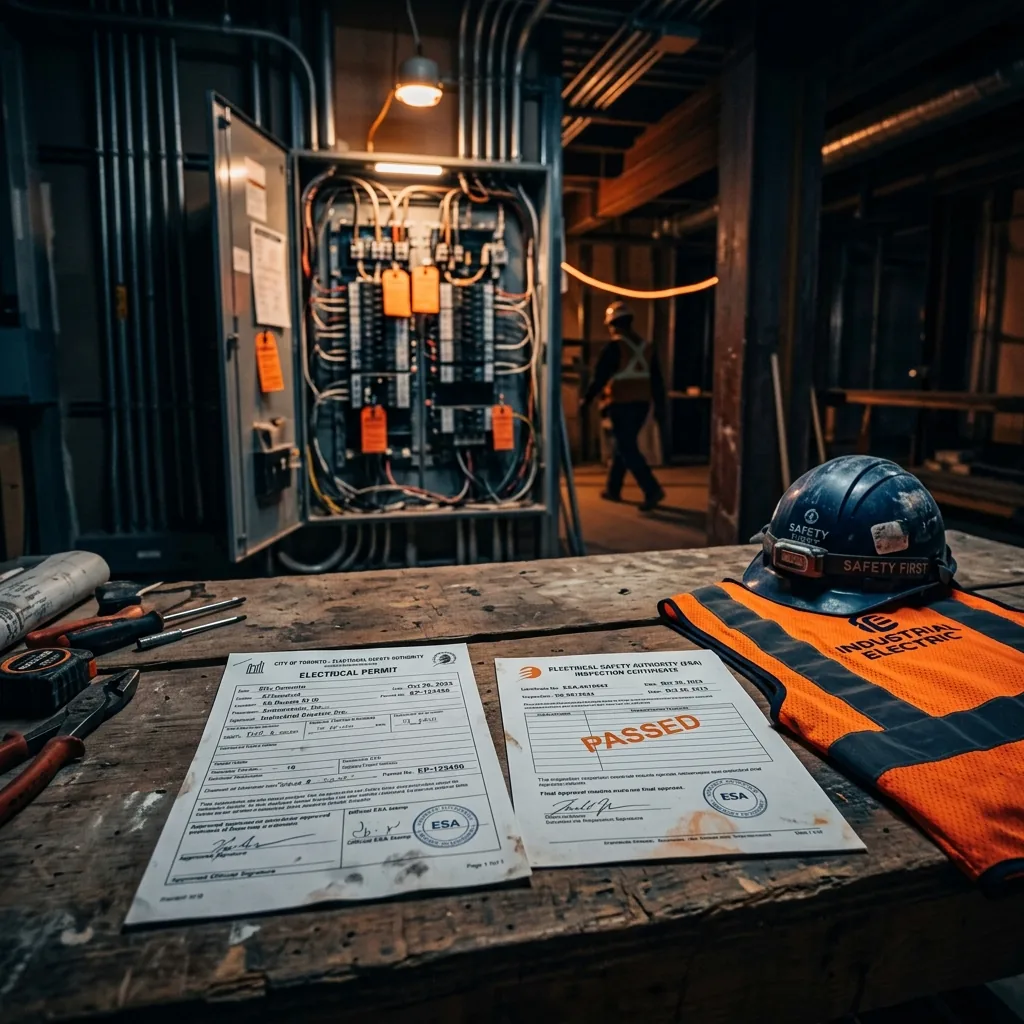
The Electrical Safety Authority (ESA) is the sole authority for electrical permits and inspections in Ontario. Unlike building permits (issued by municipalities), electrical permits are provincial and managed through ESA's online portal at esasafe.com.
Key facts:
- Only Licensed Electrical Contractors (LEC) can pull electrical permits
- Homeowners can pull permits for their own primary residence only
- Permits must be obtained before work begins
- Working without a permit is a violation of the Ontario Electrical Safety Code (OESC)
When Do You Need Electrical Engineering Drawings?
This is where most projects get delayed. ESA, utilities, and municipal building departments commonly require or request P.Eng stamped electrical drawings for projects such as:
For projects that meet Ontario Electrical Safety Code Rule 2-010 triggers, review our current guide to ESA Electrical Plan Review in Ontario, including the July 2026 12 kW threshold, single-line requirements and responsibility boundaries.
| Project Type | P.Eng Drawings Required? | Notes |
|---|---|---|
| Residential (single home) | Generally No | Usually no, unless complex, service capacity is changing, or AHJ/utility review requires it |
| Multi-unit residential | Usually | OBC Part 3 buildings require engineered drawings |
| Commercial tenant fit-out | Often | Depends on municipality, building permit scope, occupancy, and complexity |
| Restaurant / food service | Often | Kitchen equipment, fire suppression interlocks, ventilation, and service loads often require engineering coordination |
| Industrial facility | Usually | 600V systems, motor controls, arc flash |
| Service upgrade (> 200A) | Often | Utility requirements vary; engineered load letters and single-line diagrams are commonly requested |
| Fire alarm systems | Yes | CAN/ULC-S524 verification required |
"If your project needs a building permit, it almost certainly needs engineered electrical drawings. Submitting without them is the most common reason for permit rejection in the GTA."
The Step-by-Step Process
Step 1: Engage an Electrical Engineer (P.Eng)
For commercial, industrial, and multi-residential projects, the first step is engaging a licensed Professional Engineer to prepare the electrical design. This typically includes:
- Site assessment and existing conditions review
- Load calculations per CEC Section 8
- Single-line diagrams and panel schedules
- Floor plans showing receptacle, lighting, and equipment layouts
- P.Eng stamp and signature
Step 2: Submit for Building Permit
Electrical drawings are submitted as part of the building permit application to the local municipality (City of Toronto, Mississauga, Brampton, etc.). The plans examiner reviews the electrical design for OBC compliance.
Step 3: Pull the Electrical Permit (ESA)
Once the building permit is approved, the electrical contractor pulls the ESA permit through the online portal. The contractor provides:
- ECRA/ESA licence number
- Project scope and estimated value
- Reference to the P.Eng drawings
Step 4: Construction & Rough-In Inspection
After the rough-in wiring is complete (before walls are closed), the contractor requests an ESA inspection. The inspector verifies:
- Wire sizes, circuit routing, and box fill comply with CEC
- Installation matches the engineered drawings
- Fire stopping and separation are maintained
Step 5: Final Inspection & Certificate
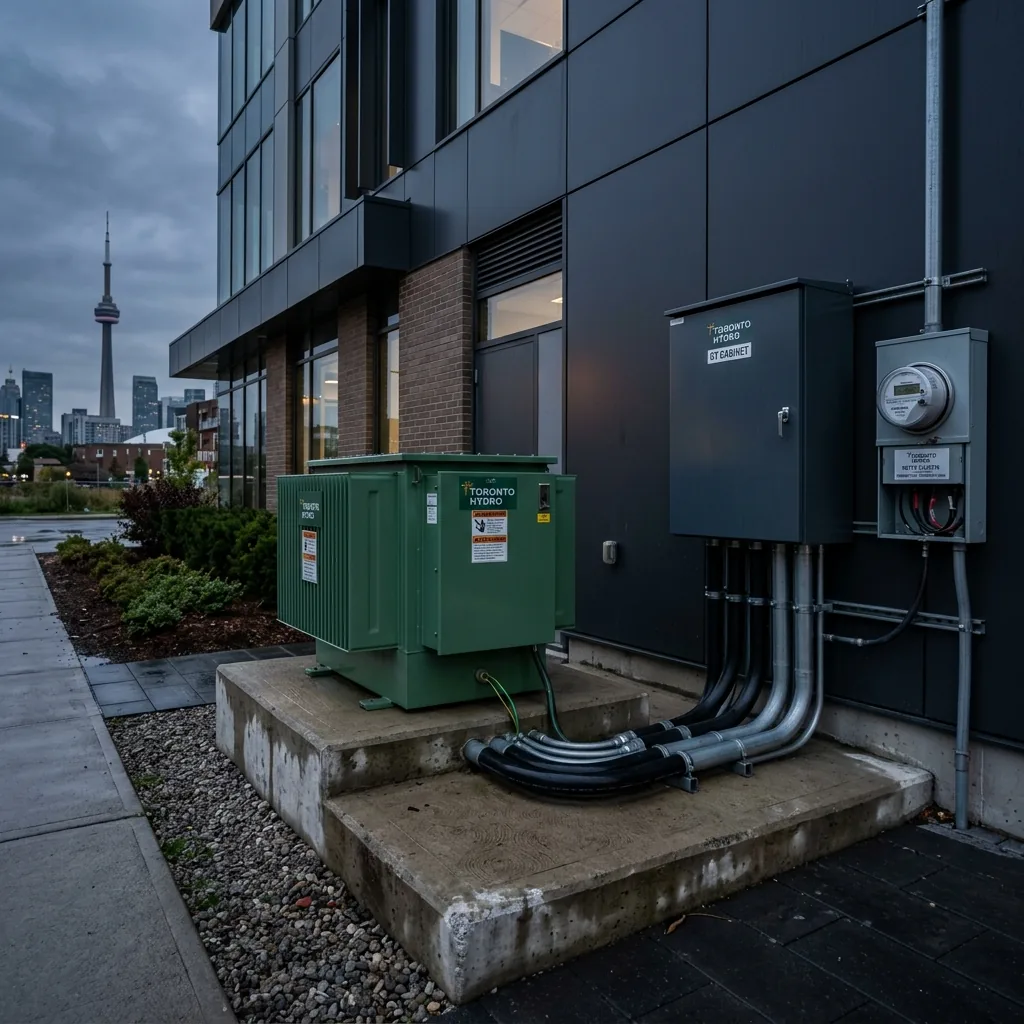
After all devices, fixtures, and equipment are installed, the contractor requests a final ESA inspection. Upon passing, ESA issues a Certificate of Inspection - this document is required before the local utility (Toronto Hydro, Alectra, etc.) will energize the service.
Common Causes of Permit Delays
- Missing P.Eng stamp - municipalities will reject submissions without engineering authorization
- Incomplete load calculations - fire alarm, HVAC, and emergency loads often omitted
- No utility coordination - service connection timelines not accounted for
- Architectural conflicts - electrical room too small or panel locations violating clearance codes
- Fire alarm not addressed - many projects trigger fire alarm requirements under OBC 3.2.4
Frequently Asked Questions
Do I need an electrical permit in Ontario?
Yes. All electrical work requires an ESA permit filed before work begins. Only Licensed Electrical Contractors or homeowners (primary residence only) can pull permits.
When are P.Eng stamped drawings required?
Commonly for multi-unit residential, commercial fit-outs, restaurants, industrial work, service upgrades, and fire alarm systems. Exact requirements depend on AHJ, building classification, scope, service size, utility requirements, and ESA plan review. See our P.Eng stamp guide for details.
How long does the permit process take?
Residential: same-day via ESA online. Commercial with plan review: 2-4 weeks. Most delays come from missing P.Eng drawings or incomplete load calculations.
Planning Electrical Permit Planning?
ETEM can review the proposed scope, existing conditions and applicable approval requirements to determine the engineering documentation needed for the project.

Need Construction-Ready Electrical Drawings?
ETEM Engineering prepares P.Eng stamped electrical drawings that pass plan review on the first submission. From load calculations through final ESA inspection.
Get a Free Consultation